

Understanding what rosary beads are (beyond the surface)
When someone asks me what are rosary beads, I usually start with something very simple: they are a string of beads that help us keep track of our prayers, especially the Rosary. But if I’m honest, for many Catholics they quietly become more than that. Over time they can feel like a familiar weight in a pocket, a gentle reminder on a bedside table, or the thing we reach for almost without thinking when life feels heavy or confusing.
From a practical point of view, rosary beads are a physical aid for repetitive prayer. The beads are arranged in a very particular pattern that matches the traditional structure of the Rosary: sets of ten Hail Marys, separated by Our Father beads, with a crucifix at one end. This design lets our fingers move along while our minds and hearts stay focused. We do not have to count. The beads quietly do that part for us.
On a more personal level, rosary beads often carry stories. I still remember the first set I really chose for myself instead of just using the one that happened to be around the house. It was a simple, sturdy set that I kept in my backpack during college. I did not pray perfectly or regularly, but just knowing those rosary beads were there helped me feel less alone, especially on long bus rides home or on evenings that felt uncertain.
If we look back through Christian history, we see that prayer beads, in different forms, have been part of many traditions. Catholics are not the only ones who use beads to guide repetitive prayer. The specific form we now call the Rosary grew slowly over centuries, but the basic human need behind it is very old: we remember better with our hands when our minds feel scattered.
How rosary beads are structured
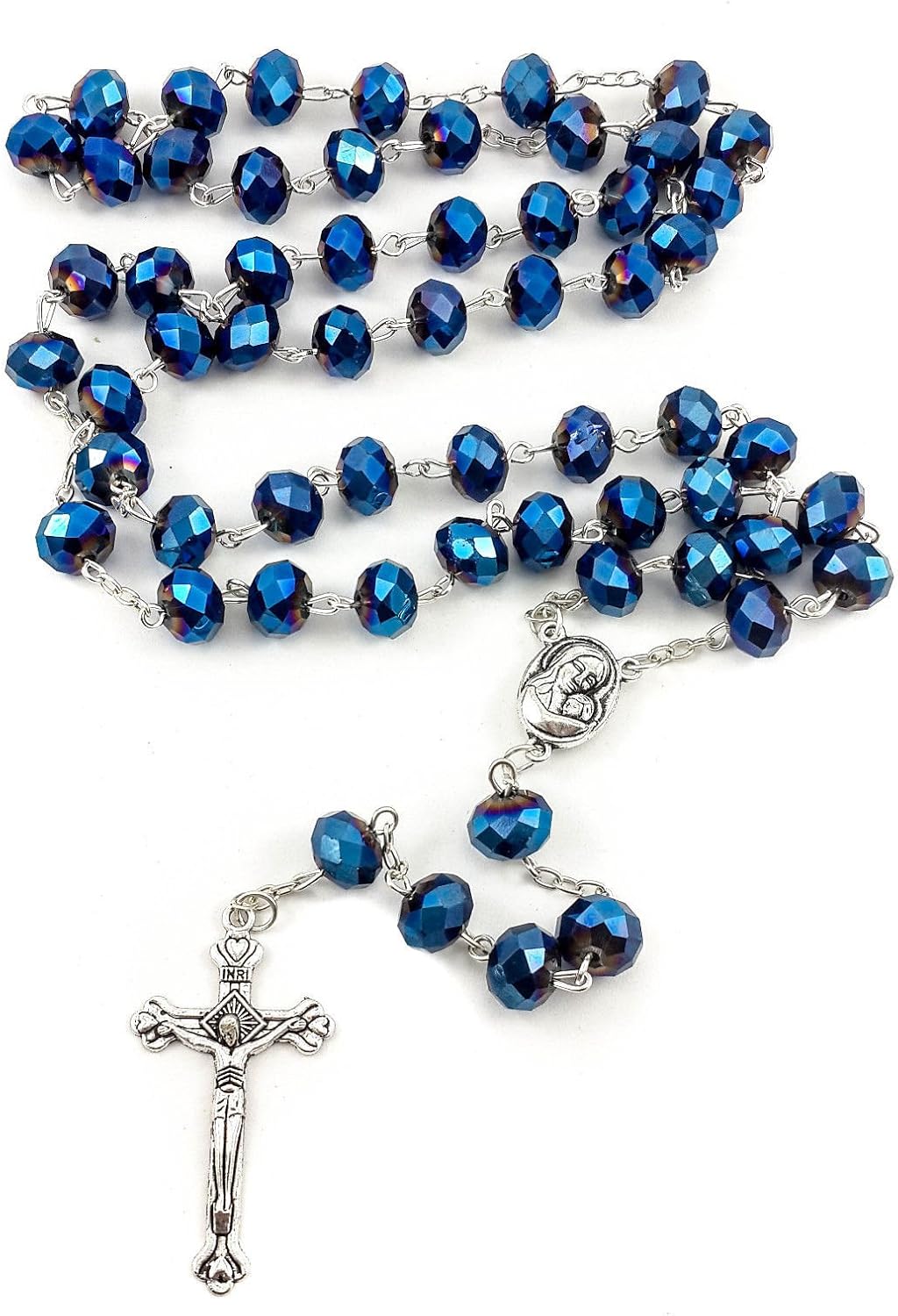
Learning what rosary beads are becomes easier when we look closely at their structure. Most standard rosary beads share the same basic layout, even if the style, material, or size changes.
- A crucifix at the end, held when we begin.
- A short length of beads leading to a centerpiece (often an image of Mary or a saint).
- Five groups of ten beads, called “decades,” each separated by a single bead.
- A centerpiece that connects the five decades to the short beginning section.
In daily life, this layout means our fingers move in a simple pattern: crucifix, small beads at the beginning, then decade after decade. Once we know the pattern, we do not have to think much about “doing it right.” Our hands find the next bead while our thoughts rest in the words of the prayers or the mysteries we are reflecting on.
When I first really paid attention to the structure, I realized how kind it is to people who are tired or distracted. There is something almost gentle about the way the beads “catch” your fingers and guide them along, especially when the mind feels foggy or worried.
What rosary beads are used for in everyday Catholic life
For many Catholics, rosary beads are part of the quiet, ordinary background of life. They are tucked into a work bag, left on a bedroom nightstand, kept in the car, or slipped into a coat pocket. They often come out during very normal moments: sitting in traffic, waiting in a doctor’s office, walking around the block, or winding down before sleep.
Here are some very common ways rosary beads are used:
- Praying a full Rosary, slowly, at home or in church.
- Praying just one decade when time is short.
- Holding them quietly without saying every word, simply being present to God.
- Keeping them nearby as a reminder to turn worries over to God instead of shouldering them alone.
- Marking anniversaries of loved ones, especially by praying for their souls.
One small habit that helped me during a stressful period of work was to keep a simple set of rosary beads in a desk drawer. On difficult days, I would close the door for five minutes, take them out, and slowly pray just one decade. It didn’t fix my problems, but it did slow my breathing and remind me that work was not the whole story of my life.
Different kinds of rosary beads you might notice
When you search for rosary beads online, it can feel overwhelming. There are wooden sets, glass sets, crystal sets, knotted cord, metal chains, small pocket chaplets, and more. Knowing what are rosary beads at their core makes it easier: the purpose is always the same, even when the style changes. The question becomes, “What fits my life and my way of praying?”
A few of the most common types you may come across include:
Traditional chain rosaries
These are the classic rosaries many of us grew up seeing, with beads linked together by small metal chains. They can be very simple or more decorative. Some people appreciate the slight weight of the metal and the way it feels in the hand. They often drape nicely over the fingers, making them comfortable to use in a chair or pew.
Wooden rosaries
Wooden rosary beads have a warm, natural feel. They do not usually flash or shine, which some people like because it keeps the focus simple. They can be especially comfortable for longer times of prayer, as they are light and gentle on the fingers. Many wooden rosaries also hold up well in pockets or bags.

Cord and knotted rosaries
Cord rosaries, sometimes made entirely of knots, are quiet and very durable. They tend not to tangle easily and can be practical for people who keep a rosary in a backpack, a car, or even a pocket with keys. They also make less noise, which can be helpful when praying late at night or in a shared household.

Smaller chaplets and one-decade rosaries
Some people like to carry a “pocket decade” or a small chaplet—basically a shortened form of the rosary that still has the ten beads and one Our Father bead. These can be easier to use discreetly, such as during a lunch break, a walk, or while waiting for children to finish an activity.

Personal experiences that shaped how I see rosary beads
My understanding of what are rosary beads changed at different moments in life. As a child, they were mostly something my grandmother used. I would watch her move the beads between her fingers while sitting in a worn armchair near the window. I did not fully understand the prayers, but I noticed the peace on her face.
Years later, in a season when I felt particularly lost and uncertain, I found myself reaching for my own rosary more often. I remember one late evening sitting on the floor near my bed, holding the crucifix and not even managing a full Rosary—just slowly moving bead by bead with short, hesitant prayers. There were no big feelings, no clear answers, just the steady rhythm. The beads almost felt like something I could hold onto when I didn’t have the words or the clarity I wanted.
At another time, during a long hospital stay of a family member, the rosary beads lived in my hand in waiting rooms and hallways. Sometimes I would pray a full set of mysteries. Other times, I simply rolled one or two beads between my fingers and breathed. The rosary did not magically fix anything, but it gave me a way to stay close to God when I felt emotionally drained.
These experiences slowly reshaped what rosary beads meant for me. They were no longer just a religious object or something “good Catholics” are supposed to use. They became more like a familiar friend that simply sits with you when you do not know what to say.
Choosing rosary beads that fit your life
When you know what are rosary beads and how they are used, it becomes easier to think about which kind might quietly support your own life of faith. There is no perfect or “holier” material. Instead, it helps to ask some gentle, practical questions:
- Where will I usually keep them — at home, in a pocket, in the car, on a bedside table?
- Do I prefer something light in the hand or something with a bit of weight?
- Do I tend to be gentle with items, or do I need something sturdy and simple?
- Do I like the look of natural wood, simple metal, or soft cord?
- Do I pray more comfortably with smaller beads or larger ones?
For example, if someone often prays on the go, a small, durable rosary that won’t tangle quickly might be more helpful than a very delicate one. If someone usually prays at home in a chair or on a couch, a slightly heavier rosary might feel comforting in the hand.
For me, there was a time when I preferred very simple wooden beads because they helped me not think too much about appearance. Later, I received a slightly more decorative rosary as a gift and was surprised by how it made me want to set aside a bit of quiet time in the evening. The look itself didn’t make the prayer better, but it did gently invite me to treat that time as something set apart.

Bringing rosary beads into a gentle daily rhythm
Once we understand what rosary beads are and how they’re meant to be used, the next quiet step is simply finding a rhythm that fits our real life. It does not have to be grand or impressive. In fact, smaller, steady habits often last longer.
Some people like to pray a decade first thing in the morning, even before checking their phone. Others use the rosary as a bridge at the end of the day, turning off screens and letting their minds settle before sleep. Some pray while walking, letting each step and bead mark a slow turning of the heart toward God.
One small pattern that has helped me is to keep a rosary on my nightstand and another in my bag. The one at home reminds me to end the day with at least a few minutes of prayer, even if I’m tired. The one in my bag is for those unexpected pockets of time—waiting in the car line, sitting alone in a park, or even pausing for a moment in a quiet corner of the office.
Over time, these little choices can shape the way we move through our days. Rosary beads remain simple objects, but they subtly draw our attention back to God, again and again, in the middle of very ordinary American life: work, family, traffic, errands, and everything in between.

FAQ on what rosary beads are and how they are used
1. Are rosary beads just a piece of jewelry?
Rosary beads are not meant to be jewelry, even though some sets are beautiful enough to look like it. They are primarily a tool for prayer. Many Catholics are comfortable wearing a rosary around the neck or wrist at times, but usually with the understanding that it is first of all a prayer companion, not an accessory.
2. Do I have to pray a full Rosary every time I pick up the beads?
No. Many people rarely have time or energy for a full set of mysteries every single day. It is very common to pray just one decade, or even a few Hail Marys, using the beads to stay focused. The important part is the honest turning of the heart toward God, not checking off a certain amount.
3. Is there a “right” material for rosary beads?
There is no one material that is spiritually better than another. Wooden, glass, metal, cord, and stone rosaries all serve the same basic purpose. What matters more is whether the rosary fits your life: durable enough for how you use it, comfortable in your hands, and quiet enough to let you focus on prayer rather than worrying about breaking it or losing it.
4. What if I get distracted while praying with rosary beads?
Distraction is very common. Many of us struggle with wandering thoughts. In a way, this is one of the reasons rosary beads are so helpful. When the mind drifts, the feel of the beads between your fingers can gently bring you back. You simply notice the distraction, return to the current bead, and start again. There is no need to be harsh with yourself.
5. Can rosary beads be a meaningful gift?
Yes, many Catholics give rosary beads for occasions like baptisms, First Communion, confirmation, weddings, or even during illness or grief. The meaning is not only in the object but in what it quietly represents: a promise of prayer, a reminder of God’s presence, and a gentle invitation to turn to Him in both joy and difficulty. When you know the person well, choosing a style or material that matches their personality can make the gift even more thoughtful.