
Rosary Beads from Italy
Rosary Beads From Italy
Rosary beads from Italy carry a quiet weight of history, family stories, and everyday prayer. They are simple objects, but for many of us they become close companions through long days, restless nights, and all the ordinary moments in between.
When people talk about Rosary Beads from Italy, they usually mean more than just a string of beads. Many of these rosaries come from places where the faith has been lived for centuries in small chapels, crowded parishes, and homes where grandparents still keep a crucifix above the bed. That sense of rootedness is something I feel every time I hold an Italian rosary in my hand.
One of my own rosaries is a simple Italian-made one with dark wooden beads and a slightly worn metal crucifix. It is not fancy at all. I bought it quietly online years ago, when I was going through a time of uncertainty. I remember opening the small package at my kitchen table after work, running the beads through my fingers, and feeling a strange sense of calm just from the familiarity of the prayers that would be prayed on them.
Rosary beads made in Italy often reflect this balance between simplicity and care. The designs might show a small image of Our Lady, a particular saint, or a basilica. Some people appreciate the artistic side, but for most of us the true value is that the beads help us stay focused, one prayer at a time, especially when our minds are tired or distracted.

Why Italian Rosaries Feel So Familiar
Italian rosaries often feel familiar even if we have never visited Italy. Maybe it is because we have seen similar ones in our grandparents’ homes, hanging on the bedpost or draped over a family statue. Maybe it is the style of the crucifix or the small center medal showing Mary that reminds us of parish gift shops or the sacristy growing up.
For many American Catholics, there is a quiet trust in items that come from places where the faith has been part of daily life for a very long time. The rosary itself is the same no matter where it was made, but knowing that it came from Italy can make us feel linked to that long, steady tradition. It is a bit like praying with something that has a story bigger than our own.
Another thing I notice about Italian rosary beads is how they age. The finish might soften over time, the metal darkens slightly, and the beads pick up a gentle shine from being held. That slow change tells its own story: these beads have passed through many Hail Marys, whispered in kitchens, hospital rooms, and quiet cars in the parking lot before an appointment.
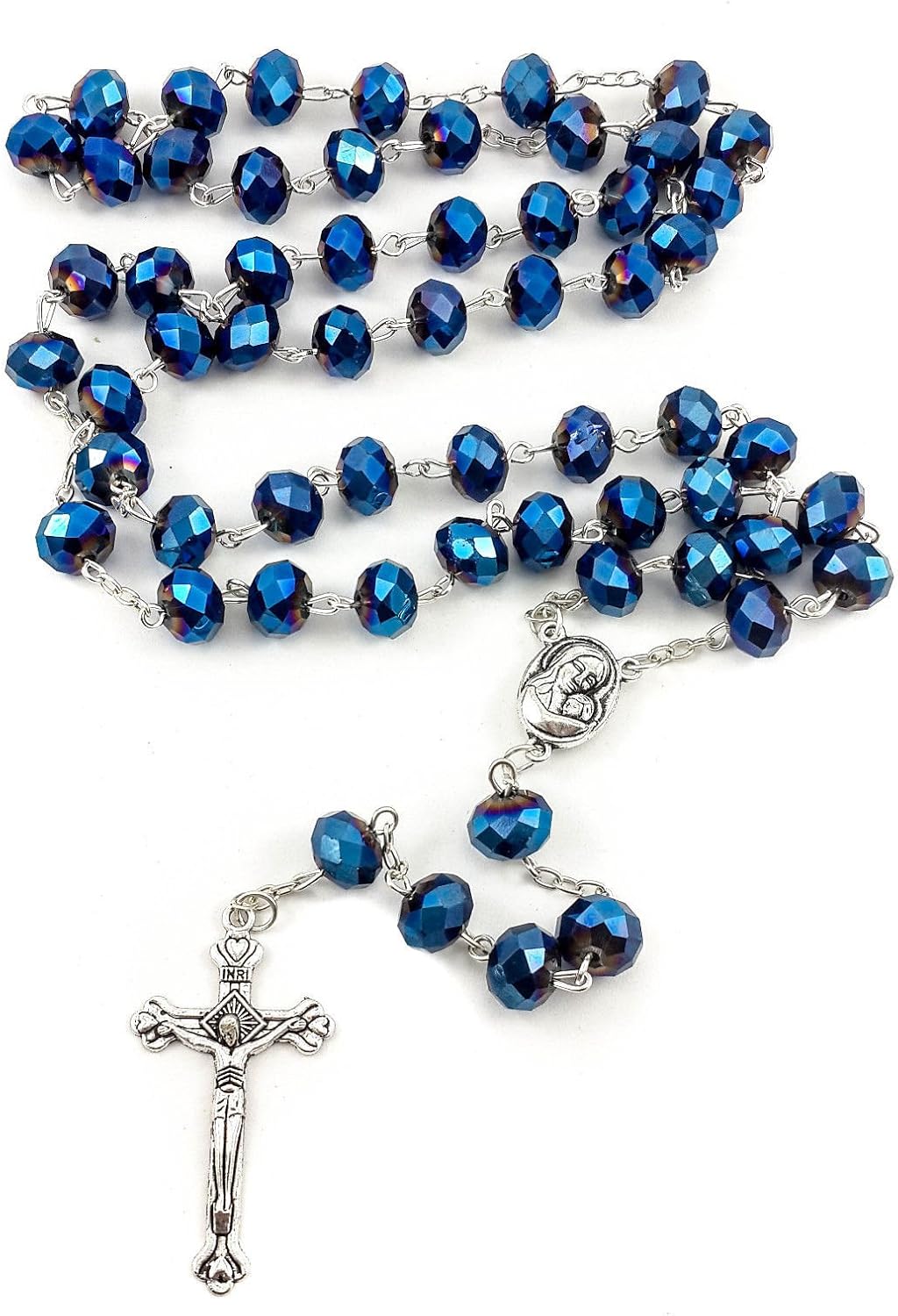
Different Styles of Rosary Beads from Italy
When you look at rosary beads from Italy, you will notice a variety of materials and styles. Each one can fit a different rhythm of life or a different personality, even though the prayers are the same.
Wooden Italian Rosaries
Wooden beads are often chosen by people who like a natural, warmer feel. The wood can be dark and polished or lighter and more rustic. I have a small Italian wooden rosary that I keep in my jacket pocket. It has been through rain, cold, and long commutes. The edges of the beads are a little smoother now, and somehow that makes it feel even more personal.
- Comfortable to hold, even for long prayers
- Often very simple, which helps keep attention on prayer
- Develop a unique look over time as they are used
Metal and Chain Rosaries
Some Italian rosaries use metal chains and more detailed crucifixes. These can feel a bit more traditional or formal. Many people like to keep this type of rosary in a small case, tucked inside a purse or briefcase, or placed on a nightstand.
Metal rosaries can make a quiet sound when the beads click together, which some people actually find comforting. It reminds them that prayer is something physical as well as spiritual: fingers moving, lips speaking, beads sliding one by one.
Glass, Crystal, and Decorative Beads
There are also Italian rosaries made with glass or crystal-like beads. These can catch the light beautifully. They are sometimes chosen as gifts for special moments: a wedding, a First Communion, or a confirmation. Even then, they are still meant to be used, not only displayed.
I once received a small glass-bead rosary from Italy as a thank-you after helping with a parish retreat. At first, I hesitated to use it, worrying I might break it. But over time I realized that a rosary is meant to be prayed, even if that means a scratch or two. That shift in thinking actually helped me pray more freely.
Praying with Italian Rosary Beads in Daily Life
The rosary is not only for special occasions or great struggles. It fits into very ordinary days: waiting in the car line, walking in the neighborhood, sitting quietly after dinner, or lying awake at 3 a.m. with worries you cannot quite name. Having rosary beads nearby makes it easier to turn those restless moments into gentle prayer.
Many people keep a rosary from Italy in a place they pass often: hanging on a doorknob, resting on a bookshelf, or looped over a lamp near the bed. That simple presence can be a reminder: “You are not alone. You can turn to God in this moment, right where you are.”
On my own nightstand there is usually one rosary that I actually use and one that simply sits there, reminding me that prayer is always possible, even if I am too tired or distracted to do it well. Sometimes, just picking up the beads and quietly saying a single decade feels like enough for that day.

Rosary Beads from Italy as Quiet Gifts
Rosary beads from Italy can make gentle, thoughtful gifts, especially when words feel too small. They can be offered for a birthday, a sacrament, a new job, or even during illness or grief. The gift itself is humble, but it carries an unspoken message: “I am praying for you, and I care about your soul and your peace.”
I once gave an Italian rosary to a friend going through a very difficult season. I did not know how to fix anything for him. I simply handed him the small pouch with the rosary inside and said, “If you ever feel like praying, this is there for you.” Years later he told me he kept it in his car and sometimes prayed a decade on the way to work, in heavy traffic, just to calm his mind.
Gifts like this do not force anything on the other person. They just offer a gentle invitation. If the person already prays the rosary, beads from Italy can feel like a special sign of closeness. If they are not used to the rosary, the beads may sit quietly for a long time before being picked up. That is okay. Grace often moves slowly and gently.

Caring for Your Italian Rosary Beads
Rosary beads are meant to be used, not kept in perfect condition. Still, a little care helps them last longer, especially if they were made with attention and skill. Italian rosaries, whether wooden or metal, can usually handle daily use if we treat them with basic respect.
A few simple habits can help:
- Keep the rosary in a small pouch or case when carrying it in a bag or pocket.
- Avoid leaving it in very hot or very damp places, like a car dashboard in summer.
- Wipe metal parts gently with a soft cloth if they pick up moisture or sweat.
- Do not pull the beads too hard when untangling; work slowly and patiently.
I have learned this the hard way. Once, I carelessly stuffed a delicate rosary from Italy into a backpack with my keys and pens. By the end of the day, the chain had kinked and a link had bent. It was fixable, but it reminded me to treat these prayer tools with the same quiet respect I try to bring to the prayers themselves.

Choosing Rosary Beads from Italy for Yourself
Choosing a rosary is a personal decision. It does not need to be expensive or elaborate. What matters is whether you feel at peace praying with it. Some people are drawn to a particular color or material. Others prefer something very plain, with nothing that distracts.
When I look at different Rosary Beads from Italy, I pay attention to a few simple things:
- Do the beads feel comfortable between my fingers?
- Is the crucifix clear and respectful in its design?
- Is the rosary sturdy enough for the way I actually live and travel?
- Does it fit easily into my pocket or bag, if I plan to carry it?
There is also the quiet question: “Can I see myself turning to this rosary on a hard day, or at night when I cannot sleep?” If the answer feels like yes, that is usually enough.
Family Traditions with Italian Rosaries
In many families, rosary beads from Italy become part of the home over generations. A rosary brought back from a pilgrimage, or ordered years ago, may be passed down quietly when someone marries, moves away, or faces a serious illness.
I remember visiting an older relative who kept several rosaries hanging from a small wooden cross on the wall. Two of them were from Italy, one with dark olive wood beads and another with pale, almost ivory-colored beads. She told me which child or grandchild each rosary was “waiting for,” even if she had not yet given them away. For her, the rosaries were not decorations, but promises of prayer for each person.
Simple practices like a family rosary once a week, or a decade together on Sunday evenings, can be supported by these beads. Children often remember the feel of their parents’ or grandparents’ rosaries long after they forget the exact words that were said.

Finding Peace in Repetition
The rosary is, in many ways, a prayer of repetition. For some, that sounds dull at first. But over time, many people discover that the repetition itself can be a source of deep calm. The fingers move from bead to bead. The familiar words come almost automatically. Slowly, the heart quiets down.
Italian rosary beads, with their particular style and weight, can support this rhythm. The steady movement across each bead can make it easier to stay present, especially when the mind wants to race ahead to worries or plans. Some people even find it helpful to pray just one decade slowly, matching their breathing to the prayers, rather than rushing through all five.
I have had evenings when I started a rosary feeling distracted, doubtful, or even a little resistant. By the second or third decade, something softens. Not always in a dramatic way—often just enough to sleep more peacefully or to look at a difficult situation with a bit more gentleness.

Frequently Asked Questions About Rosary Beads from Italy
Are rosary beads from Italy different from other rosaries?
The prayers of the rosary are the same no matter where the beads were made. What often makes Italian rosaries stand out is the craftsmanship and the connection to places where the faith has been lived for many generations. You might notice particular styles of crucifixes, medals, or materials that reflect Italian devotional art. For many people, that background adds a sense of continuity with the wider Church.
Can I use my Italian rosary even if I am still learning the prayers?
Yes. Many people learn the rosary gradually, one prayer or one mystery at a time. The beads themselves can actually help you learn, because they guide you through the sequence: the Our Father beads, the Hail Mary beads, and the Glory Be. It is perfectly fine to start slowly, even with just a single decade, and to keep a small card or booklet nearby while you get used to the structure.
Is it respectful to carry rosary beads from Italy in my pocket or bag?
Carrying rosary beads in a pocket or bag can be a very natural way to keep prayer close during the day. Many people do this so they can reach for the rosary during breaks, commutes, or unexpected moments of worry. It helps to keep the rosary in a simple pouch or case, both to protect it and to remind yourself that it is something sacred, not just another object among many.
What should I do if my Italian rosary breaks?
If a rosary breaks, it does not mean anything negative spiritually. It usually just means it has been well used. When possible, you might try to have it repaired, especially if it has personal or family meaning. Some parishes or local Catholic shops can suggest where to have rosaries fixed. If repair is not possible, many people choose to bury the rosary or bring it to a parish to be respectfully disposed of, rather than simply throwing it away.
How can I make praying the rosary a habit with Italian beads?
Habits usually grow from small, realistic steps. You might keep your Italian rosary in a visible place, like beside your bed or on your desk, and set a simple goal: one decade in the morning, or a few Hail Marys during your lunch break. Over time, those small moments can become something you quietly look forward to. The important thing is not to pressure yourself, but to return to prayer gently, again and again, as you are able.
If you feel drawn to bring Rosary Beads from Italy into your own prayer life or to share them with someone you care about, you can quietly explore the different options available online and choose the ones that fit your way of living and praying.