
Rosary Beads Cross
For many Catholics, a rosary beads cross is one of the most familiar objects we own. It might sit on a nightstand, hang from a rearview mirror, or rest in a pocket or purse, always close by even on the busiest days. It is small, but it carries memories: family prayers, a grandparent’s example, or that first time we really tried to pray the Rosary and stay focused from beginning to end.

When I think of a rosary, I do not first think of a “religious product.” I picture my grandmother’s hands slowly moving from bead to bead while she sat on the edge of her bed. Her rosary beads cross was worn and faded, and the metal had lost its shine, but it was clear that this was something she reached for again and again. That quiet, steady faith left a mark on me in a way that words never could.
The quiet place a rosary beads cross can create
Life can crowd our minds with noise: phone notifications, work demands, worries about money, health, and family. A rosary beads cross does not block those things out, but it can help us make a little space inside them. Just holding the cross in the palm of your hand can be a reminder to pause, breathe more slowly, and turn your thoughts toward God for a moment.
Many people keep a rosary near their bed and reach for it almost without thinking when they wake in the middle of the night. Others slip one into a pocket before heading out the door, not because they have a grand plan for prayer that day, but because they do not want to face the day entirely on their own strength. A rosary can become a gentle habit: a decade while walking the dog, another while waiting in the school pick-up line, another during a lunch break.
For me, the rosary beads cross I keep in my car has turned traffic jams and long drives into unexpected chances to pray. When the red lights stretch out ahead of me, instead of just growing impatient, I sometimes reach down, feel the cross between my fingers, and quietly begin a decade. Nothing dramatic happens, but my heart softens a little, and the time no longer feels wasted.
Understanding the rosary beads cross itself
A traditional rosary has five decades of beads, plus a short strand that leads to the crucifix or cross. The cross is where we begin the prayer, tracing the Sign of the Cross and often reciting the Apostles’ Creed. In a way, the whole prayer starts and ends there, with Christ’s sacrifice, even as we move through the life of Jesus and Mary in the mysteries.
The Catholic Rosary as a devotion has a long history in the Church, but at home it can be very simple. A person alone with a single set of beads, quietly speaking familiar words, fits easily into the life of a busy parent, a college student, or an older person living alone. The rosary beads cross is often the easiest part to notice and to hold onto, especially when distractions make it hard to focus on every bead.
Some people feel drawn to a specific kind of cross: a plain and simple one, a detailed crucifix showing the body of Christ, or one that includes a particular saint or symbol. Others focus more on how it feels in the hand: smooth, sturdy, not too heavy, not too sharp at the corners. These details might seem small, but they can make a difference when the rosary becomes part of daily life.
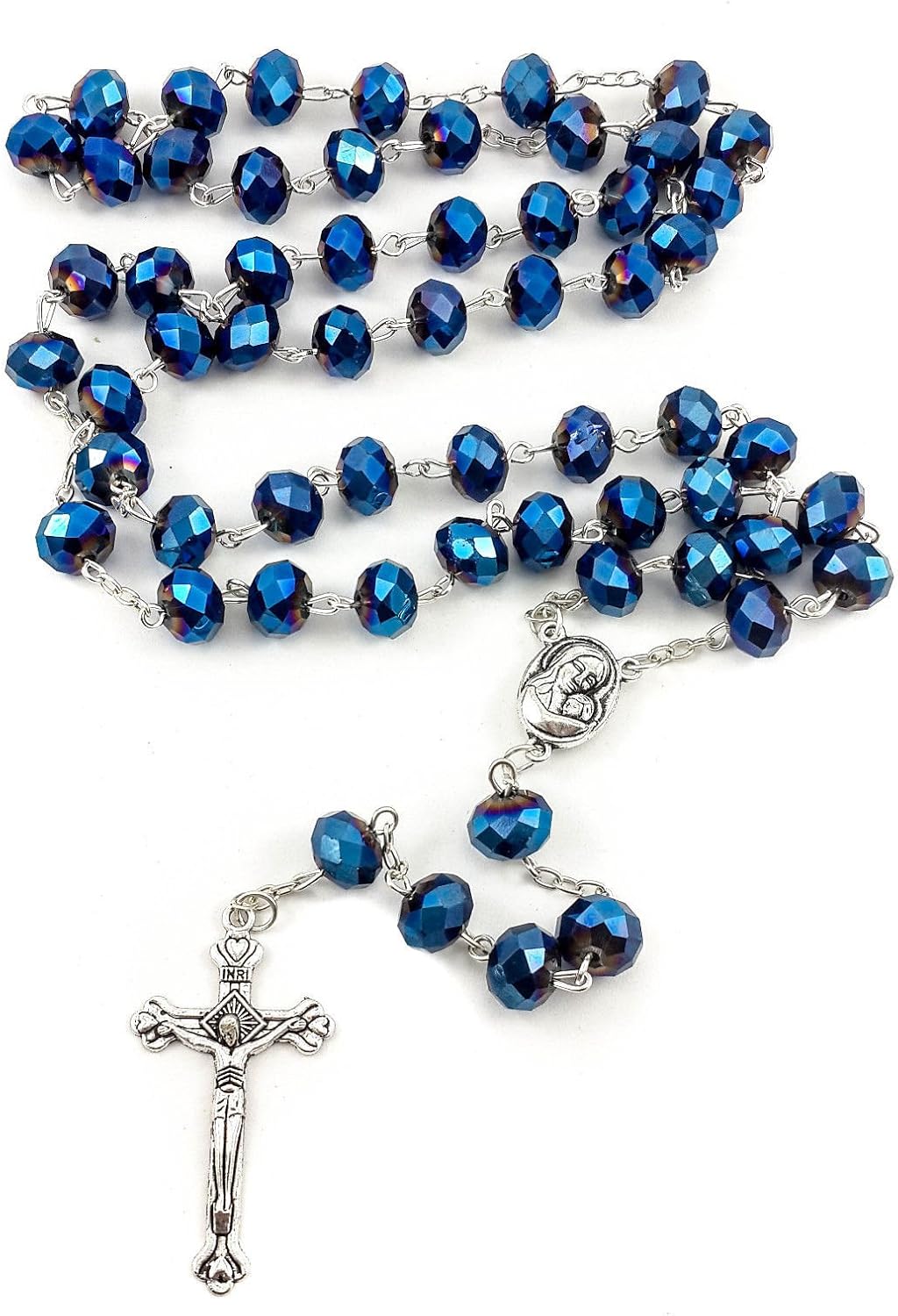
Materials, style, and what they can mean
A rosary beads cross can be made from many materials: simple wood, silver-colored metal, stainless steel, glass, or even olive wood from the Holy Land. None of these is “better” in a spiritual sense, but each can encourage a different kind of connection.
- Wooden crosses often feel warm and familiar, and they can remind us of the simplicity of the stable in Bethlehem and the wood of the Cross.
- Metal crosses tend to be sturdy and long-lasting, suitable for daily use and for carrying in a pocket or bag.
- More decorative crosses with detailed designs or stones can gently remind us of the beauty of God’s work, especially when we need encouragement.
Over time, our rosary beads cross may show signs of wear: the color fading, a surface becoming smooth where the thumb often rests, or small scratches here and there. Instead of seeing these as flaws, many Catholics see them as a sign that the rosary has been prayed with. The cross slowly becomes part of the story of a person’s faith journey.

Everyday ways to pray with a rosary beads cross
Not everyone can sit and pray an entire Rosary each day. Some people do, and that is beautiful, but many of us find ourselves praying a decade here and there. A rosary beads cross can gently support that kind of prayer rhythm, one small step at a time.
Here are a few realistic ways Catholics often use their rosary throughout the day:
- Praying a short decade on a morning walk, asking God to stay close during the day.
- Holding the cross for a moment before starting a difficult task, silently entrusting the work to God.
- Keeping a rosary on the nightstand and reaching for it when sleep does not come easily.
- Praying together as a family once or twice a week, even if the kids are squirmy and the house is noisy.
- Carrying a small pocket rosary beads cross for quick prayers in waiting rooms or between errands.
I still remember one particular week when I felt completely worn out. I kept my rosary beads cross nearby, even on my work desk, and every time a new worry came up, I would reach over, touch the cross, and quietly say just one Hail Mary. I did not feel anything dramatic, but those little moments helped me remember that I was not alone in what I was carrying.

Gifting a rosary beads cross with care
A rosary beads cross is often given as a gift for sacraments: First Communion, Confirmation, a wedding, or even a religious profession. It can also be a thoughtful gesture during a time of grief, illness, or transition, like a new job or a move. When we give someone a rosary, we are not handing them a solution to their problems; we are quietly saying, “You are not alone. I am praying for you, too.”
When choosing a rosary as a gift, many people consider:
- The person’s age and life situation (for example, sturdier crosses for children or teens).
- Whether the style of the cross might match their personality: simple, traditional, or more decorative.
- If they prefer smaller beads for discreet carrying, or larger ones that are easier to hold and see.
One of my favorite memories is giving a small rosary beads cross to a friend who was going through a hard time. I did not have many words to comfort her, so I simply wrapped the rosary, wrote a short note promising my prayers, and left it at her door. Years later she told me she still keeps that rosary by her bed and reaches for it on the evenings that feel especially heavy.

Different types of rosary beads crosses
When looking for a rosary beads cross, you might notice several common styles:
- Classic five-decade rosary: the most familiar style, good for home, parish, and daily carry.
- One-decade or pocket rosary: a single decade with a cross, easy to keep in a pocket or purse.
- Bracelet rosaries: worn on the wrist, helpful for those who like to have a rosary always at hand.
- Wall or bedside rosaries: often larger, meant to hang near a bed or prayer corner at home.
Each type can support prayer in a slightly different way. A full five-decade rosary is well suited for longer times of prayer, while a small pocket rosary beads cross might be easier for someone who is just beginning or who struggles to find long uninterrupted blocks of time.
Caring for a rosary beads cross
Caring for a rosary beads cross does not have to be complicated. A soft cloth to gently wipe off oils from the hands, a small pouch to keep it from tangling in a bag, and a safe place to rest it at night can all help it last for many years. If the rosary breaks, it is usually possible to have it repaired by someone who works with religious items or with basic jewelry tools.
Many Catholics like to keep their rosary in a consistent, respectful place when it is not in use: on a nightstand, in a small dish, in a drawer, or hanging by a bedside crucifix. This is less about rules and more about intention, treating the object that supports our prayer with simple care and gratitude.

Making the rosary beads cross part of a simple prayer routine
A rosary beads cross can serve as a gentle “anchor” for a daily routine of prayer, even if that routine is small and imperfect. Some people set a simple intention like, “One decade a day,” and accept that some days it may be prayed while doing dishes, walking, or waiting in line. Others aim for a full Rosary a few times a week and carry the beads to remind themselves of that desire.
What seems to matter most is honesty and perseverance rather than perfection. There will be days when prayer feels dry, rushed, or distracted. On those days, even just picking up the rosary beads cross and whispering a single Our Father can be an act of trust. Over months and years, those small, faithful acts can quietly shape a person’s heart.

Questions about using a rosary beads cross
1. Do I need a special rosary beads cross to start praying the Rosary?
No. Any simple rosary with a cross or crucifix is enough to begin. The important part is the intention to pray, not the material or design. Over time, you might find that a certain style or feel helps you stay more focused, but you can start with whatever you have.
2. Is it okay if I only pray part of the Rosary with my beads?
Yes. Many Catholics pray just one or two decades at a time, depending on their schedule and energy. You can return to the rosary beads cross later in the day and continue where you left off. There is no requirement to finish all five decades in one sitting for your prayer to be meaningful.
3. Can children use a rosary beads cross, and how can I introduce it to them?
Children can absolutely use a rosary, especially if it is sturdy and appropriate for their age. Many families begin with a single decade together in the evening, perhaps focusing on one mystery and keeping the prayers short. Letting a child gently hold the cross, kiss it, or place it by their bed can help them feel that the rosary is something close and comforting, not just an adult object.
4. What if I get distracted or my mind wanders while praying with my rosary beads cross?
Distractions are very common. When you notice your thoughts wandering, you can simply return to the next bead or look at the cross and begin again. Many people silently say, “Lord, you know my heart,” and continue. The effort to return, again and again, is itself a small act of faithfulness.
5. How do I choose a rosary beads cross that fits my daily life?
Think about where and how you are most likely to pray. If you plan to keep it in your pocket or purse, a smaller, sturdy rosary might serve you best. If you hope to pray at home with family, a slightly larger rosary with a clear, visible cross might feel more natural. Consider what feels comfortable in your hand, what will last with daily use, and what quietly draws your heart toward God.