
Pope Leo Rosary Beads
Pope Leo Rosary Beads
Many Catholics find comfort in holding a simple set of beads while praying, especially when life feels busy or scattered. Pope Leo Rosary Beads are often chosen by people who feel drawn to a steady, traditional way of praying the Rosary, with a quiet nod to a pope who encouraged this prayer in times of trial.
When I first came across Pope Leo Rosary Beads, I was not looking for anything special or rare. I simply wanted a rosary that felt solid in the hand, gentle in appearance, and somehow connected to the long history of the Church’s trust in Mary’s intercession. Over time, these beads became familiar to me: on the nightstand, in the car, tucked into a jacket pocket.
On this page, I would like to share how Pope Leo Rosary Beads can fit into the ordinary rhythm of an American Catholic’s day: early morning prayer before work, a decade said while waiting in a parking lot, or a quiet moment at the end of the evening. The goal is not to pressure you into anything, but to walk alongside you and describe how these beads can gently support a life of simple, steady prayer.

Who was Pope Leo and why these beads matter
The name “Pope Leo Rosary Beads” usually points back to Pope Leo XIII, sometimes called the “Rosary Pope” because he wrote many encyclicals encouraging the prayer of the Rosary. He lived in the late 19th century, a time of social change, political tension, and uncertainty. In that atmosphere, he turned again and again to Mary through the Rosary.
For many Catholics today, using Pope Leo Rosary Beads is a quiet way of joining that long line of people who, in anxious times, chose to hold on to something simple and solid. The beads themselves are not magic and they do not guarantee any particular outcome. They are simply a tool that helps keep the mind and heart focused on Christ, through the mysteries of His life, death, and resurrection.
When I first read a short excerpt of Pope Leo’s writings on the Rosary, I was struck by how ordinary his language could be. He did not treat the Rosary as something for specialists or experts, but as a prayer for families, workers, and ordinary Catholics. That sense of “this is for people like me” comes to mind whenever I pick up beads associated with his name.
How Pope Leo Rosary Beads fit into daily life
Morning: starting the day with intention
Many people like to keep their Pope Leo Rosary Beads near the bed or on a nightstand. Some pray a full Rosary before the day begins; others manage just a decade or even a few Hail Marys. The value is not in finishing a quota, but in beginning the day by consciously turning to God.
There have been mornings when my alarm goes off and my first reaction is stress about the day ahead. Reaching over and feeling the familiar cross and beads reminds me to pause. Sometimes all I can manage is one decade while the coffee brews. On those days, the Pope Leo Rosary Beads are not a project to complete, but a lifeline that quietly points my thoughts back to Christ.
A simple routine might look like this:
- Make the Sign of the Cross while still in bed or just after getting up.
- Hold the crucifix and slowly pray the Apostles’ Creed or another brief prayer.
- Choose one mystery that fits the season or the mood of the day.
- Pray a single decade, very calmly, without rushing.
Over time, this habit can become almost second nature, not as a burden but as a gentle way to begin the morning with faith.
Daytime: keeping the beads close
Many Catholics like to keep a rosary in a pocket, purse, or backpack. Pope Leo Rosary Beads, especially if they are sturdy and not too delicate, can be good companions through commutes, errands, and work breaks. They do not need to be seen or noticed by others; often they stay hidden, but their presence is felt.
I remember a stressful afternoon in a hospital waiting room, when I found my Pope Leo Rosary Beads at the bottom of a jacket pocket. Just holding them, even before I began to pray, helped me breathe a little more slowly. Eventually I started one decade, then another. I did not feel any sudden change inside, but it gave shape to the waiting and made the time feel offered rather than wasted.
During the day, these beads can be used in small moments:
- A decade while walking during lunch break.
- Two or three Hail Marys before an important meeting.
- A quiet mystery prayed in the car before going into the house after work.
The point is not to make the day look pious from the outside, but to quietly weave prayer into the ordinary tasks and interruptions that already exist.
Design features that support prayer
Pope Leo Rosary Beads can come in many materials and styles, but several features tend to matter most for everyday use: how they feel in the hand, how easily they move between fingers, and how durable they are when carried often. Here are some aspects that many Catholics pay attention to.
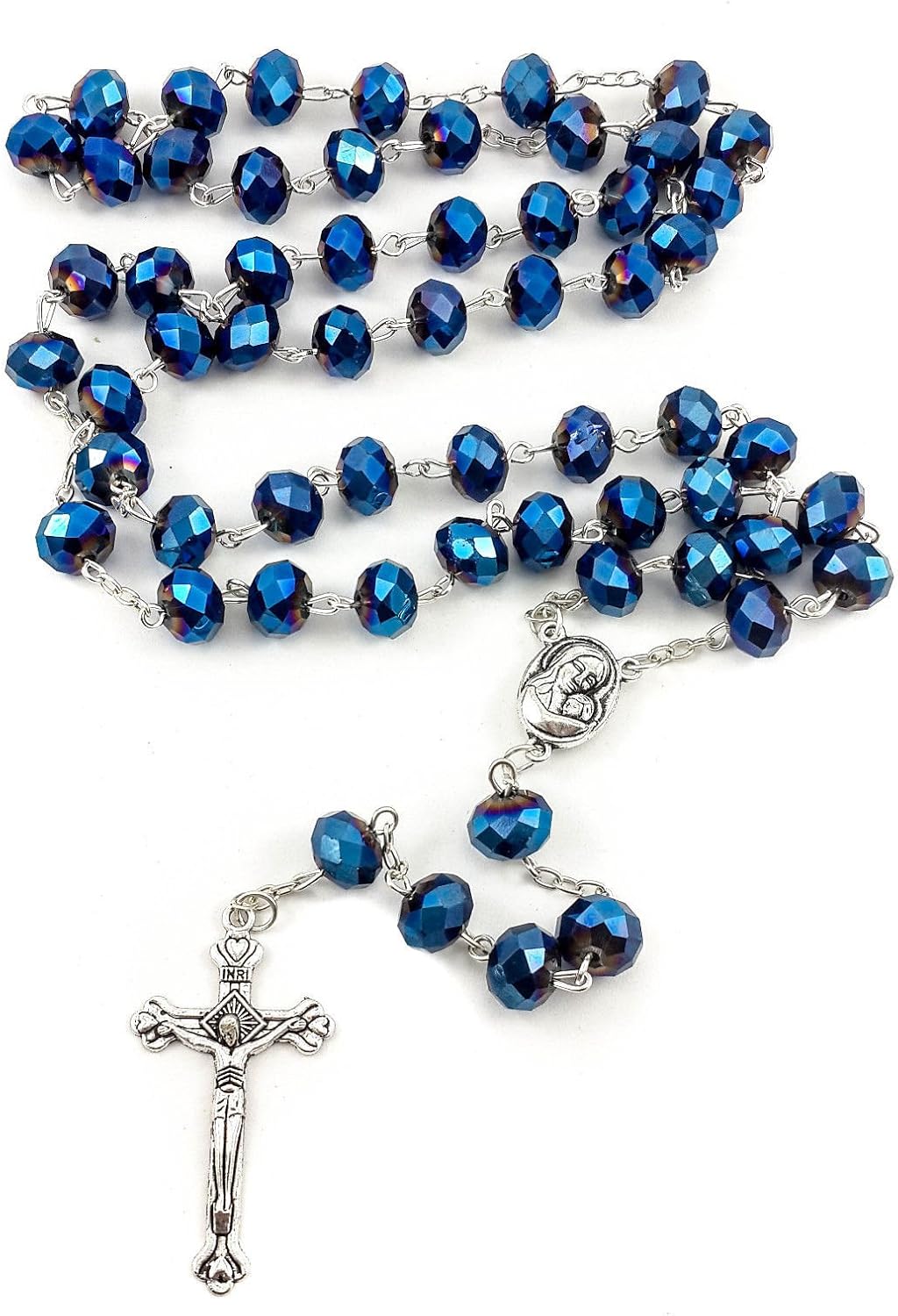
Bead material and feel
Some Pope Leo Rosary Beads are made of wood, which can feel warm and quiet between the fingers. Others are made of glass or stone, slightly cooler and heavier. A smooth, rounded surface usually makes it easier for the fingers to move from bead to bead without distraction.
I personally like a rosary that has just a bit of weight but is not too heavy. When the beads are too light and flimsy, I tend to fidget more and focus less. When they have a little substance, they remind me that prayer, like the beads, has weight and history, even on days when I do not “feel” much.
Centerpiece and crucifix
Pope Leo Rosary Beads often include a centerpiece that may show Mary, the Sacred Heart, or another traditional image. Some versions may mention Pope Leo XIII or be inspired by his devotion. The crucifix at the end can be simple or more detailed, but it is usually the part that gets the most wear from being held and kissed.
Over the years, I have noticed that the crucifix on my most-used Pope Leo Rosary Beads has small signs of wear where my thumb rests. Those marks, while tiny, are a reminder that prayer is something lived over time, not just imagined. It is comforting to see that history in the metal or wood.
Durability and everyday handling
For people who carry their rosary daily, durability matters. Strong chain links or cord, secure connections, and beads that do not easily crack can make the difference between a rosary that is used for years and one that breaks after a few months of being pulled in and out of pockets or bags.
Pope Leo Rosary Beads that are designed for regular use often emphasize sturdiness. This is not about luxury or show, but about reliability. When a rosary holds up over time, it becomes familiar in the best sense: you know how it hangs from your fingers, how it slips into your hand in the dark, how it sits in your palm at the end of a long day.
Personal ways to pray with Pope Leo Rosary Beads
There is no single “right” way for a lay Catholic to incorporate Pope Leo Rosary Beads into daily life. People adapt the Rosary to the shape of their schedules and their energy. Some pray all five decades at once; others spread them throughout the day. Some sit in a favorite chair; others walk or even pray quietly while doing simple chores.

Praying a full Rosary
Some people find it helpful to choose a consistent time of day for a full Rosary with their Pope Leo Rosary Beads: early morning, after dinner, or before bed. Sitting in the same chair, lighting a small candle, or turning off unnecessary screens can make it easier to stay focused. The beads act as a steady rhythm, helping the mind move through the mysteries at a gentle pace.
There are evenings when my mind is tired and scattered, and I find myself starting and stopping again. On those nights, the beads help me remember where I left off, so I do not have to depend on my memory alone. Sometimes I finish all five decades; sometimes I pause after two or three and continue the next day. The important thing, for me, is not perfection but faithfulness.
Praying by decades
For many busy Catholics, a “decade at a time” pattern works better:
- One decade in the morning, offering the day to God.
- Another during lunch or a commute.
- One while waiting in line or sitting in a parking lot.
- Two more in the evening, perhaps with family.
Pope Leo Rosary Beads are well suited to this style because they are easy to pick up and put down without ceremony. There is something comforting about knowing that if you cannot do everything at once, you can still move steadily, decade by decade, through the mysteries over the course of a day.
Praying with family or friends
Some families keep a particular set of Pope Leo Rosary Beads in a common area of the home: on a small prayer table, hung near a family picture, or placed in a simple bowl. During certain seasons of the Church year—like October, often associated with the Rosary—families may gather more intentionally to pray together.
In my own experience, group prayer with the Rosary can feel awkward at first, especially if everyone is at a different spiritual place. But using a familiar set of beads, passed from hand to hand or simply present in the room, can give a sense of continuity. The beads do not solve tensions or differences, but they become a shared point of reference, a reminder that prayer belongs to everyone in the room, no matter how strong or weak their faith feels at the moment.
Pope Leo Rosary Beads in moments of struggle
Many Catholics turn most deeply to their Pope Leo Rosary Beads during difficult times: illness, unemployment, grief, or family conflict. The beads do not remove the pain or solve the problems, but they give a pattern to the prayer that might otherwise be only restless thoughts.

I remember a season when someone close to me was going through a very painful situation. I could not fix anything, and most of my words felt shallow. Late at night, I would sit in the dark with my Pope Leo Rosary Beads and simply move my fingers from bead to bead, naming that person in my heart with every Hail Mary. There were no dramatic moments, just a steady sense that I was not carrying the burden alone.
In times like that, the structure of the Rosary—the repeated prayers, the mysteries, the rhythm—can be a mercy. When we do not know what to say, the Church gives us words to lean on. Holding the Pope Leo Rosary Beads, we join not only with our own past prayers, but with generations of Catholics who have done the same in their own struggles.
It is important to remember that no rosary, no matter how meaningful, guarantees a particular outcome. The beads are not a contract or a tool of persuasion, but a way of staying close to God and Mary in the middle of whatever happens. They help us remain present, honest, and prayerful when we might otherwise shut down or drift away.
Caring for your Pope Leo Rosary Beads
When a set of rosary beads becomes part of your daily life, it is natural to want to care for it with respect. This is especially true for Pope Leo Rosary Beads that you use for years, or that have been given to you by someone you love.

Practical care
Simple habits can help rosary beads last longer:
- Keep them in a small pouch or case when carrying them in a bag.
- Avoid leaving them in extreme heat, like a dashboard in summer.
- Wipe them gently with a soft cloth if they collect dust or oils from the hands.
- Check occasionally for any weak links or fraying cord.
None of this needs to be complicated. The point is not to treat the rosary like a fragile museum piece, but to show ordinary respect to an object that is used for something sacred.
Spiritual respect
For many Catholics, Pope Leo Rosary Beads are blessed by a priest or deacon. That blessing does not change the physical material, but it reflects the intention that these beads are set aside for prayer. Out of respect, it is common to avoid tossing them carelessly, leaving them on the floor, or mixing them randomly with unrelated objects.
When a rosary becomes damaged beyond repair, some people choose to bury it or burn it reverently, instead of throwing it away with regular trash. This simple act reflects the belief that objects used for prayer deserve to be treated with care, even at the end of their usable life.
Over time, the way you handle your Pope Leo Rosary Beads can itself become a form of quiet prayer: picking them up gently, putting them down carefully, and letting them remind you that faith touches even ordinary gestures.
Different looks, same purpose
Pope Leo Rosary Beads can appear in a wide variety of finishes and styles: darker wood or lighter, simple silver-tone chains or warmer metals, plain beads or ones with subtle marbling. These differences may reflect personality, culture, or family tradition, but the central purpose remains the same: to help the heart meditate on the mysteries of Christ through Mary.
Personally, I have gone through different phases. At one point, I preferred darker wooden Pope Leo Rosary Beads that felt almost invisible in my hand. Later, I was given a lighter set with a slightly more decorative crucifix. At first I thought it was “too nice” for me, but over time it became the rosary I reached for most often. The important thing was that it felt prayerful, not showy, in the way I used it.
For some people, a more traditional style connects them to memories of grandparents or parish communities from childhood. For others, a simpler and more modern look fits their current life. No matter the appearance, the same sequence of prayers and mysteries flows through the beads, connecting each person not only to their own story, but to the wider Church.
Keeping your Pope Leo Rosary Beads close at hand
One quiet decision that can shape how often you use your Pope Leo Rosary Beads is simply where you keep them. If they are buried at the back of a drawer, they may stay untouched for months. If they are placed where your hands naturally go during the day, they become part of your routine almost without effort.

Some simple ideas:
- On the nightstand, next to an alarm clock or lamp.
- In a small dish or tray by the front door, where you leave your keys.
- In the car’s center console, wrapped in a soft cloth or pouch.
- In a work desk drawer that you open frequently.
I found that once I placed my Pope Leo Rosary Beads next to my phone charger, I naturally reached for them when plugging in my phone at night. That small pairing—technology and prayer side by side—became a daily reminder that faith can quietly share the same space as everything else in my life.
When prayer feels dry: still holding the beads
There are seasons when praying the Rosary, even with a favorite set of Pope Leo Rosary Beads, feels dry or mechanical. The mind wanders, the heart feels distant, and the words tumble out more from habit than from any sense of closeness to God. Many Catholics know this experience well.

In those times, I have found it helpful not to judge the prayer too harshly. Instead of asking, “Was this a good Rosary?” I simply notice that I showed up, held the beads, and did what I could. The Pope Leo Rosary Beads remind me that prayer is not measured by feelings, but by faithfulness, however small.
Sometimes, during a particularly dry season, I shorten my practice: one or two decades instead of all five, prayed slowly and quietly. Even if my mind keeps drifting, I gently bring it back as best I can. The beads feel like a physical anchor, a small stability when my interior life feels scattered.
Over time, these simple, imperfect efforts can shape the heart more deeply than we realize. A worn set of Pope Leo Rosary Beads often tells the story of many such days—days when the prayer felt alive and days when it felt flat, all offered steadily, bead by bead.
Frequently asked questions about Pope Leo Rosary Beads
Most Pope Leo Rosary Beads are used with the same traditional Rosary prayers that Catholics already know: the Apostles’ Creed, Our Father, Hail Mary, Glory Be, and so on. Some people also like to add prayers associated with Pope Leo XIII, such as the Saint Michael Prayer, but that is a personal choice rather than a requirement. The beads themselves usually follow the standard Rosary layout, so they can be used with any approved Rosary format.
No. These beads can be used by any Catholic who wants to pray the Rosary, whether they are just starting or have been praying it for years. The connection to Pope Leo XIII may appeal to people who love Church history or have a special devotion to him, but nothing about the structure of the beads requires a higher level of knowledge or practice. They are as suitable for a beginner as for someone who prays the Rosary daily.
Yes, many Catholics carry their rosary in a pocket, purse, backpack, or car. Pope Leo Rosary Beads are often chosen for daily carry because they tend to be sturdy and traditional in style. If you carry them regularly, a small pouch or case can protect them from tangling with keys or other items. Holding the beads briefly during the day, even without praying a full Rosary, can be a quiet reminder to turn your thoughts toward God.
They do not have to be blessed in order to be used, but many Catholics like to ask a priest or deacon to bless their Pope Leo Rosary Beads. The blessing expresses the intention that these beads are set aside for prayer. If you choose to have them blessed, you can simply bring them to your parish and ask after Mass or during another appropriate time. Until then, you are free to begin praying with them right away.
If your Pope Leo Rosary Beads break, you can first see whether they can be repaired by someone who works with rosaries or jewelry. Many simple breaks, like a loose link or a detached crucifix, can be fixed. If the beads are blessed and beyond repair, some Catholics choose to bury or burn them respectfully, rather than throw them away. In any case, the prayers you said with those beads are not lost; they remain part of your ongoing relationship with God, even if you eventually begin using a new set of beads.